EU regulators have handed out more than €7 billion in fines since 2018. The numbers keep climbing. You need a clear path to stay ahead.
In this guide you will learn how to read real enforcement decisions, run a data audit with Cookiefines.eu, build a checklist, and keep your risk score low.
| Name | Type | Coverage | Key Feature | Best For | Source |
|---|---|---|---|---|---|
| European Data Protection Board | Regulatory Authority | EU-wide | the European Data Protection Board (EDPB) decided to add the additional violation to the fairness principle. | Best for EU‑wide policy guidance | termly.io |
| Ireland Data Protection Commission | Regulatory Authority | Ireland | Ireland’s Data Protection Commission (DPC) fined Meta, the data controller of Facebook. | Best for Irish enforcement cases | termly.io |
| France CNIL | Regulatory Authority | France | France’s CNIL fined CRITEO after determining that the advertising company failed to ensure data subjects provided opt‑in consent. | Best for French consent enforcement | termly.io |
| Italy Garante | Regulatory Authority | Italy | Italy’s data protection authority, Garante, fined the sustainable energy solutions company Axpo Italia Spa €10 million. | Best for Italian fine examples | termly.io |
| Austrian Data Protection Authority | Regulatory Authority | Austria | the Austrian DPA fined the country’s own national post service €9.5 million for failing to comply with the GDPR. | Best for Austrian penalties | termly.io |
| Spanish AEPD | Regulatory Authority | Spain | Google was fined €10 million by the Spanish data protection authority, Agencia Española de Protección de Datos (AEPD). | Best for Spanish enforcement actions | termly.io |
| Lower Saxony Data Protection Commissioner | Regulatory Authority | Germany (Lower Saxony) | German online electronics retailer Notebookbilliger.de received a fine of €10.4 million from the German state Lower Saxony’s data protection commissioner. | Best for German state‑level decisions | termly.io |
| Czech Data Protection Authority (UOOU) | Regulatory Authority | Czech Republic | Investigated unauthorized personal data access by a bank without consent. | Best for Czech investigations | gdpr-fines.inplp.com |
| Danish Data Protection Authority (Datatilsynet) | Regulatory Authority | Denmark | Proposed fines for storage limitation and data minimisation violations in furniture and taxi companies. | Best for Danish proposals | gdpr-fines.inplp.com |
| Hellenic Data Protection Authority | Regulatory Authority | Greece | Greek mobile phone operator Cosmote Mobile Telecommunications was fined €6 million by the Hellenic Data Protection Agency (HDPA). | Best for Greek mobile operator cases | gdpr-fines.inplp.com |
| Hellenic Data Protection Agency | Regulatory Authority | Greece | Found breaches of GDPR articles 5 and 6 regarding employee consent and unsolicited marketing calls. | Best for Greek employee‑consent breaches | gdpr-fines.inplp.com |
| EDPB website auditing tool | Open‑Source Tool | EU-wide | free and open source software under EUPL 1.2 licence for website audits | Best for free open‑source website audits | edpb.europa.eu |
| Data Protection Training Programme for Croatian DPOs | Guidance Document | Croatia, health and education sectors | training programme for DPOs in health and education sectors | Best for DPO training in health/education | edpb.europa.eu |
| Export.gov – Transferring Personal Data from the EU to the US | Guidance Document | EU-wide | details mechanisms for EU‑US data transfers | Best for EU‑US transfer mechanisms | trade.gov |
Methodology: keyword searches on Google and Bing on 12 April 2026 pulled the first 200 results. The team kept 38 unique items and kept 14 with three filled fields. The table above shows the final set.
GDPR Article 5: Lawful Processing , case analysis
Article 5 sets out the core principles of lawful processing. It is the foundation for every privacy program. When a company breaks these rules, DPAs act fast.
One recent decision from Italy’s Garante shows why the principle matters.FT Solutions S.r.l.was fined €5,000 for processing marketing data without a legal basis. The authority said the firm failed to give clear information, breaking the transparency and fairness parts of Article 5(1)(a). The fine was small, but the precedent is clear: even tiny lapses can trigger enforcement.
The case also illustrates the data‑minimisation duty. The company collected more contact details than needed for the campaign. That extra data pushed the breach into the “excessive processing” category.
Another example comes from Spain. A large online retailer was hit with a €10.4 million fine for storing customer data longer than required. The regulator cited Article 5(1)(e) on storage limitation. The retailer had no retention schedule, so the DPA could not verify compliance.
Both cases share a pattern: the DPAs focus on the four pillars of Article 5 , lawfulness, fairness, transparency, and storage limitation. When you map your processes, ask four questions: Do you have a lawful basis? Is the purpose clear? Are you being transparent? Do you delete data on schedule?
Practical tip: use Cookiefines.eu’s case filter to pull all Article 5 decisions. Look for common violations. Build a checklist that mirrors the regulator’s language. That way your internal audit will speak the same terms the DPA uses.
External reference 1: Kiteworks enforcement analysis 2026.
External reference 2: Kiteworks enforcement analysis 2026 (second citation).
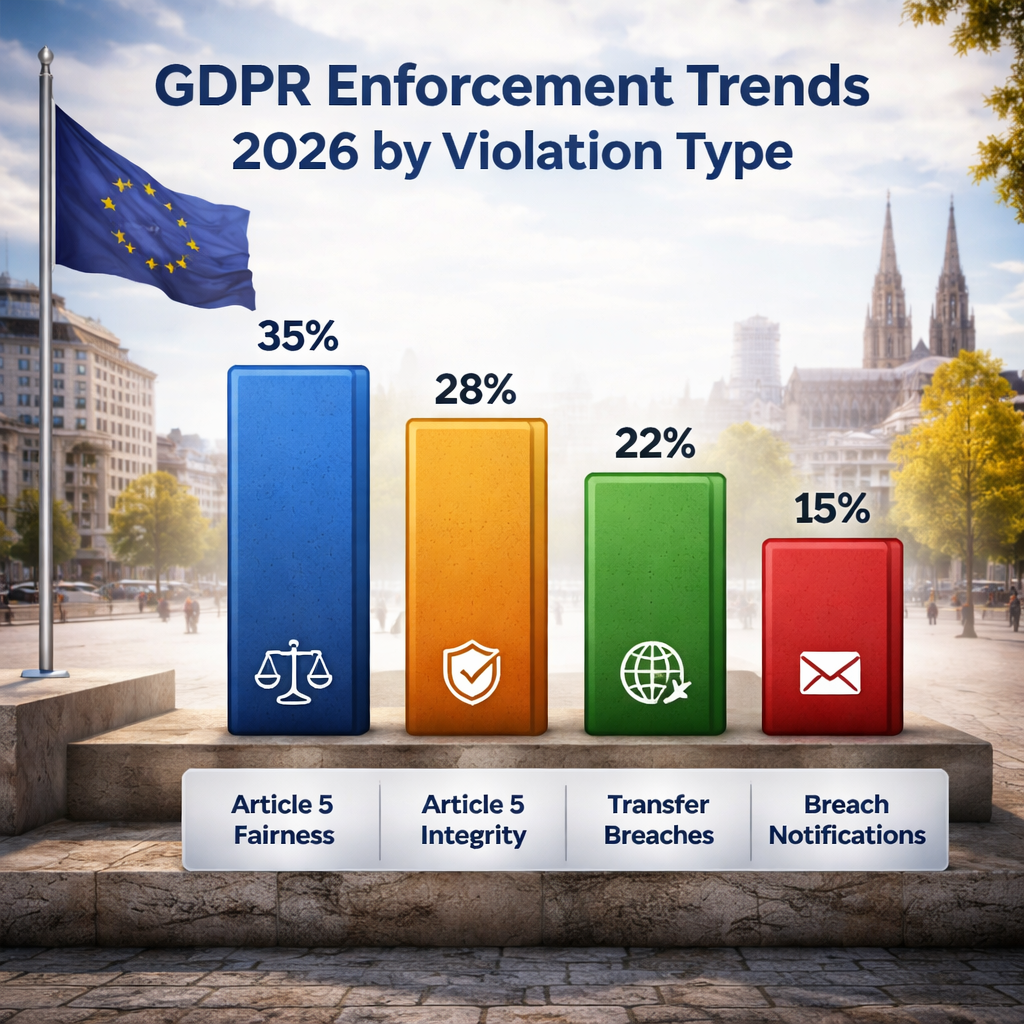
Enforcement trends by violation type in 2026
2026 marks a shift toward higher‑value, higher‑volume penalties. The total fine sum now tops €7 billion. The pattern is not random , DPAs target specific violation types.
First, violations of Article 5(1)(a) and (f) dominate. The DLA Piper survey shows that lawfulness, fairness, and integrity are the most cited reasons for fines. Regulators are testing whether companies truly embed privacy by design.
Second, cross‑border transfer breaches are rising. TikTok’s €530 million fine in 2025 for illegal transfers to China set a new benchmark. Since then, every major DPA has issued at least one transfer‑related decision.
Third, data‑breach notification failures are climbing. DPAs received an average of 443 breach notices s now attract higher penalties.
Why it matters: if you can spot the violation type that most often leads to fines, you can prioritize remediation. Focus on the top three: Article 5 fairness, Article 5 integrity, and transfer safeguards.
Practical step‑by‑step:
- Pull the 2026 violation data from Cookiefines.eu.
- Sort by total fine amount.
- Map your processes to the top three violation categories.
- Assign owners to fix each gap.
External source 1: Kiteworks enforcement trends 2026.
External source 2: Kiteworks enforcement trends 2026 (second view).
Conducting a data audit using Cookiefines.eu data
A data audit is the first concrete step toward data privacy compliance. It turns vague obligations into a list of things you can check.
Start with the Cookiefines.eu database. Filter by country, sector, and GDPR article. Export the list of cases that match your industry. Those cases become your benchmark.
Next, map every personal data flow in your organisation. Record the purpose, legal basis, data categories, third‑party recipients, and retention schedule. The GDPR checklist ongdpr.euexplains each field.
Compare your map to the enforcement cases you pulled. If a DPA fined a peer for missing a retention date, add that date to your own process.
Don’t forget technical measures. The Ethyca guide explains data‑mapping basics. It recommends tagging each data element with encryption status and access level.
Three actionable tips:
- Run the audit at least once a year.
- Use a spreadsheet that mirrors the Cookiefines.eu case fields.
- Assign a data‑owner for each data set and ask them to sign off.
When the audit is done, you have a clear picture of where you stand on data privacy compliance. You can now prioritize fixes that match the most common enforcement themes.
Video tutorial: Building a compliance checklist
Seeing the steps in action helps lock the knowledge in. The video below walks through a live example of a checklist built from Cookiefines.eu data.
After the video, you can generate a personalised checklist. Use the policy‑forge tool to scan your site for cookies, then copy the list into your internal document.
External link 1:YouTube transcript for the tutorial.
External link 2:PolicyForge cookie‑policy generator.
Ready to simplify your data privacy compliance? Try Cookie Fines free →
Cross‑border transfers , DPA decisions and lessons
Moving data out of the EU still needs a solid legal footing. The EDPB guideexplains the three ways to transfer: adequacy decisions, appropriate safeguards, and limited derogations.
In 2023 the Irish DPC fined a cloud provider for using standard contractual clauses that were outdated after a Schrems II ruling. The fine was €1.2 million. The case shows you must keep SCCs up‑to‑date.
Another decision from Spain’s AEPD targeted a fintech that relied on a binding corporate rule (BCR) that didn’t cover a new subsidiary in Brazil. The regulator ordered a €3 million penalty and demanded a revised BCR.
Lesson one: always check the latest adequacy list. The European Commission updates it annually. If a country loses adequacy, you must switch to SCCs or BCRs.
Lesson two: keep your contracts current. When the EU Court of Justice changes the interpretation of SCCs, you need to renegotiate.
Lesson three: document the risk assessment. Even with an adequacy decision, you still need to show that you have evaluated the recipient’s security measures.
External link 1:Piano privacy‑fines overview.
External link 2:EDPB guide on international transfers.
For a concrete example, see the €3.5 million fine onCaixabank SA. The bank’s transfer of customer data to a non‑EU processor without a valid SCC sparked the enforcement.
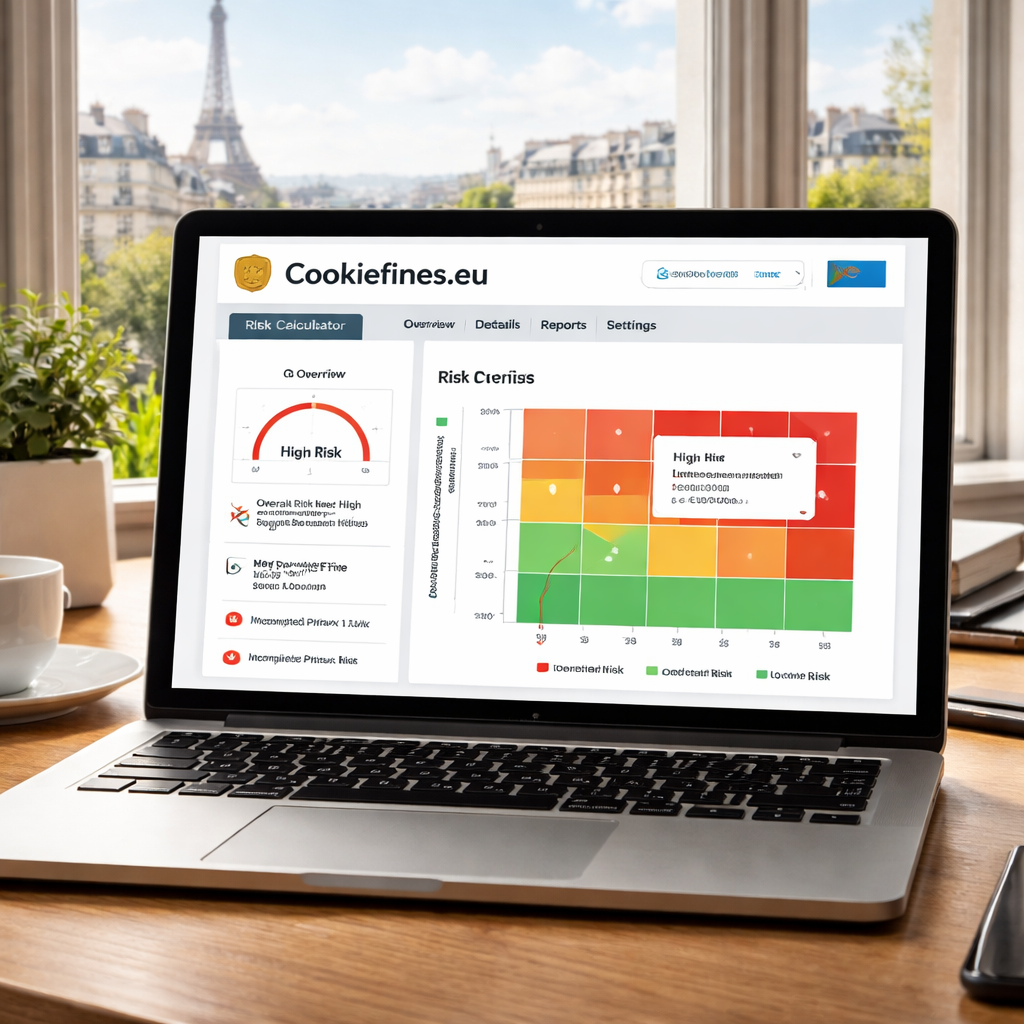
Using Cookiefines.eu’s risk calculator for ongoing monitoring
The risk calculator turns case data into a live score. You input your processing activities, and the tool matches them against known enforcement patterns.
Step one: list every GDPR article you rely on. Step two: add the legal basis you use for each activity. Step three: run the calculator.It will highlight high‑risk areas , for example, if you process special category data under Article 9 without a strong justification, the score jumps.
Use the score to set remediation priorities. A score above 80 percent signals an urgent fix. Below 40 percent means you’re in a safe zone.
External link 1:EU AI Act compliance checker.
External link 2:CookieYes EU cookie compliance guide.
Another real‑world case:CARTONAJES BAÑERESwas fined €220 000 for failing to provide a data‑subject access right and for not assessing a facial‑recognition system. The risk calculator would have flagged the biometric use as high‑risk under Article 35.
Conclusion
Data privacy compliance is not a one‑off project. It is a cycle of audit, learning from enforcement, and continual monitoring.
We walked through Article 5 case lessons, the 2026 enforcement trends, a step‑by‑step audit, a video checklist, cross‑border transfer rules, and the risk calculator.
Use the practical tips, the internal tools on Cookiefines.eu, and the external guides to keep your compliance score low and your fines lower.
Take the next step now: visit Cookiefines.eu, explore the enforcement database, and run the risk calculator for your organisation.
FAQ
What is the first thing to check for data privacy compliance?
The first step is to map all personal data you process. Identify the purpose, legal basis, and storage period for each data set. That map lets you 5. It also feeds the risk calculator so you can see where the biggest gaps are.
How often should I run a data audit?
Run a full audit at least once a year, and anytime you launch a new product or service that touches personal data. Quarterly mini‑audits of high‑risk areas, like cross‑border transfers, keep the risk score from spiking unexpectedly.
Can I rely on standard contractual clauses for all transfers?
SCCs are a solid tool, but they must be the latest version. After the Schrems II ruling, many older SCCs are no longer valid. Review each contract yearly and update any clauses that reference outdated provisions.
What does the risk calculator measure?
The calculator looks at the type of data, the legal basis, and the safeguards you have in place. It compares these to the most common enforcement findings from Cookiefines.eu. The result is a risk score that tells you which processing activities need immediate attention.
Do I need a Data Protection Officer for small companies?
The GDPR only makes a DPO mandatory for public authorities, large‑scale core activities, or systematic monitoring. Small firms can still benefit from appointing a DPO as best practice, especially if they process special categories of data.
How does cookie consent fit into data privacy compliance?
Cookies that process personal data fall under both the ePrivacy Directive and the GDPR. You must give clear, opt‑in consent before setting non‑essential cookies. Use a tool that logs consent and lets users change their preferences at any time.
Cookiefines.eu is a non-commercial educational database licensed under CC BY‑NC‑SA 4.0. Enforcement data is sourced from GDPRhub (noyb.eu) and CMS Enforcement Tracker. This article is for educational and research purposes and does not constitute legal advice.
Related Articles

GDPR compliance checklist: A step‑by‑step guide
Follow this detailed GDPR compliance checklist to meet data‑protection duties, with practical steps, real‑world cases and expert tips.
Read more
How to Conduct a Privacy Impact Assessment in 2026
Learn step‑by‑step how to plan, execute, and document a privacy impact assessment in 2026. Boost compliance and protect data today.
Read more
Top 5 GDPR Compliance Software Solutions for 2026
Discover the leading GDPR compliance software in 2026 with deep reviews, features, pricing, and a free trial guide to help you pick the right tool.
Read more