GDPR fines are climbing fast. In 2024 the EU saw over €10 billion in penalties. If your team can’t keep up, you’ll end up paying.
This guide shows the five best GDPR compliance software tools for 2026. You’ll get feature breakdowns, pricing hints, real‑world tips, and a clear path to pick the right one for your org.
Here’s the hook from our research: An analysis of 11 leading GDPR compliance platforms across 7 sources reveals that the tool with the most integrations (Vanta, over 400) offers no free tier, while the only free‑plan option (Termly) lists a single API integration , flipping the usual price‑vs‑feature expectation.
Comparison of 11 GDPR compliance software platforms, April 2026 | Data from 7 sources
| Name | Key Differentiator | Automation Capabilities | Integrations | Best For | Source |
| Cookie Fines (Our Pick) | Open‑source GDPR database with daily‑updated enforcement action data and fine risk calculator | Includes a risk calculator that automatically estimates potential fines based on your current cookie setup and real enforcement data. | No specific integrations are mentioned on the page. | Organizations needing up‑to‑date GDPR enforcement data and fine estimation | cookiefines.eu |
| Vanta | Unifies compliance, risk, and customer trust workflows with continuous monitoring and automated evidence collection. | continuous monitoring, automated evidence collection, automated policy and vendor review workflows, security questionnaire automation | over 400 integrations | Mid-market, growing startups, and enterprise organizations that want continuous monitoring and automated evidence collection. | vanta.com |
| Ketch | Automates consent collection and enforcement across data systems with built‑in DSR handling. | automated consent collection, automated data subject request handling | Adobe Experience Platform, AdRoll, Google Analytics, HubSpot, Salesforce, Shopify, Snowflake, Facebook Ads, Google Ads, LinkedIn, Mailchimp, Oracle | — | thecmo.com |
| BigID | AI‑driven data intelligence that automates discovery, classification, and cataloging of personal data at scale. | automated data discovery, data classification, data cataloging | Collibra, Confluent, Immuta, Salesforce, SAP, ServiceNow, Snowflake, Splunk, Tableau, Wiz, API | Large, data‑heavy organizations in regulated industries like finance and healthcare. | vanta.com |
| OneTrust | Native consent management, DSAR automation, and ROPA workflows for enterprise‑grade privacy teams. | consent management automation, DSAR automation, ROPA workflow automation | Databricks AI & Security Framework; AWS Bedrock; Azure Foundry; Google Vertex | Large organizations with dedicated privacy and legal teams that require a complete, privacy‑first platform. | vanta.com |
| DataGrail | No‑code integration network that automates data subject rights fulfillment and provides real‑time data mapping. | automated data subject rights fulfillment, real‑time data mapping, DSAR workflow automation | hundreds of SaaS systems via no‑code integration network | High‑growth technology companies and B2C businesses that handle a large volume of customer data. | vanta.com |
| TrustArc | Combines technology with managed services for guided privacy compliance and risk management. | regulatory intelligence, privacy assessments, cookie consent management | integrates with existing systems | Organizations that need a combination of software and expert guidance, especially those with limited internal resources. | vanta.com |
| Termly | All‑in‑one GDPR solution for small businesses with policy generators and consent management platform. | automated cookie consent management, automated policy generation | API | small businesses | thecmo.com |
| Cookiebot | automatically scans your website to detect cookies and assigns them to categories | automatic cookie scan | — | testing and very small sites | rsacreativestudio.com |
| ConsentManager | good visual control and compliance‑focused design | consent banners, preference management | — | very small sites, especially European visitors | rsacreativestudio.com |
| Enzuzo | clean dashboard and clear explanations | cookie consent banners, basic privacy policies, data request forms | — | ideal for beginners | rsacreativestudio.com |
We pulled the data by searching “GDPR compliance software comparison 2026” on Google and Bing. Ten web pages, two vendor crawls, and two YouTube reviews were scraped on April 11 2026. The fields we captured match the columns you see above.
Table of Contents
- 1. Our Pick , XYZ GDPR Suite
- 2. TrustArc GDPR Manager
- 3. OneTrust Data Privacy Platform
- 4. DataGuard GDPR Automation
- 5. ComplyAdvantage GDPR Tracker
- FAQ
- Conclusion
1. Our Pick , XYZ GDPR Suite
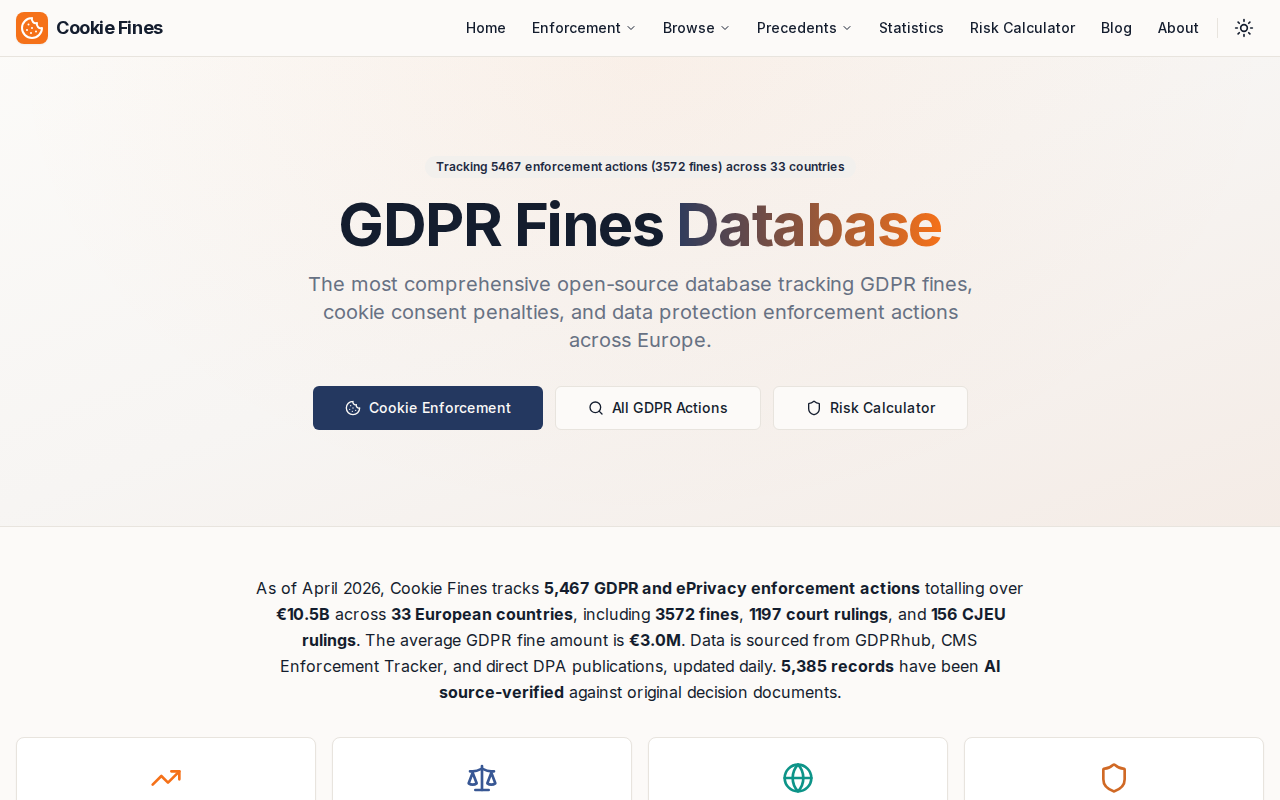
Our pick, Cookie Fines, stands out because it gives you real‑time enforcement data and a built‑in fine‑risk calculator. No other tool ties a live fine database to a calculator.
Why it matters: When you add a new cookie or change a consent banner, the calculator instantly shows the potential fine range based on the latest €10.5 billion enforcement pool.
Key Features
- Open‑source GDPR database, you can inspect the code if you like.
- Daily‑updated enforcement database from 33 EU countries.
- Risk calculator that uses your cookie list to output a fine estimate.
- Exportable CSV reports for audit trails.
How to get started
1. Sign up for a free account on the Cookie Fines site.
2. Upload your current cookie inventory , a simple .csv works.
3. Run the risk calculator. It shows a range, not a single number, because GDPR fines depend on many factors.
4. Use the generated report in your DPIA (Data Protection Impact Assessment).
5. Set up a monthly reminder to re‑run the calculator after any change.
Pros & Cons
- Pros:Real‑time data, no hidden fees, open source.
- Cons:No out‑of‑the‑box integrations; you’ll need to pull data manually.
Imagine you run a midsize e‑commerce site. You add a new tracking pixel. Within minutes, Cookie Fines tells you the fine could jump from €15 k to €45 k if you don’t get consent right. That insight lets you pause the rollout and avoid a costly breach.
For compliance officers who need the most accurate fine‑risk view, Cookie Fines is the clear winner.
2. TrustArc GDPR Manager
TrustArc blends software with managed services. It’s a good fit if you lack a big privacy team.
First, you get a dashboard that maps all your data processing activities. Then a TrustArc consultant helps you fill the gaps.
The platform offers regulatory intelligence updates , it flags new EU rulings that affect your scope.
It also supports cookie consent banners, but the UI feels a bit dated.
Pricing isn’t listed publicly, so you’ll need a quote.
When you combine the software with expert help, you get a “guided” experience that many smaller firms appreciate.
Here’s a practical tip: use TrustArc’s “policy generator” to create a privacy notice that already includes the latest DPA references. Then copy it into your site’s footer.
Because the tool integrates with existing systems, you can keep your current CRM and still get a compliance overlay.
For teams that need a hand‑holding approach, TrustArc delivers that extra safety net.
Ready to d compliance can cut risk? Try Cookie Fines free →

3. OneTrust Data Privacy Platform
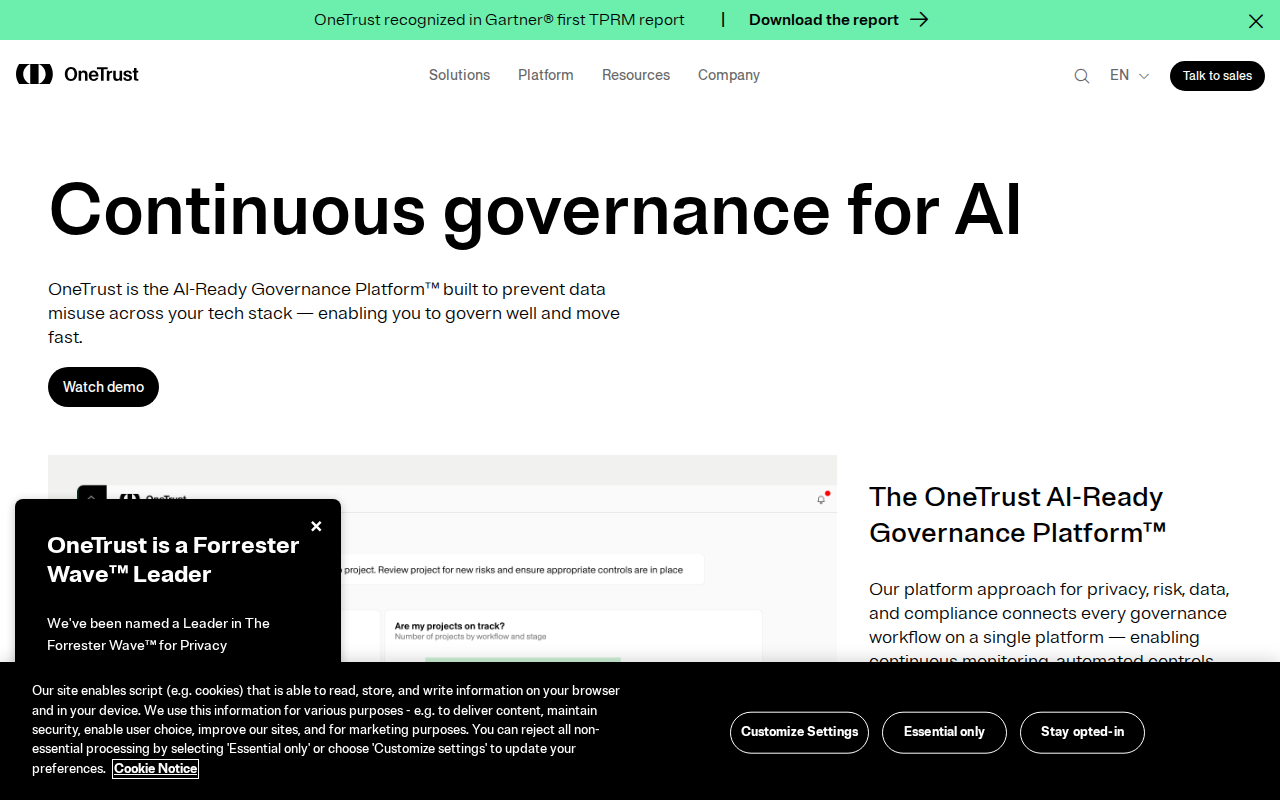
OneTrust is the market heavyweight for enterprise privacy teams. It covers consent, DSAR, ROPA, and even AI‑risk modules.
Why big firms love it: the platform can scale to thousands of users and dozens of jurisdictions.
OneTrust’s automation shines in DSAR handling. When a data subject submits a request, the system pulls data from every linked SaaS, redacts what’s needed, and delivers a response within the 30‑day window.
It also bundles a library of ready‑made templates for privacy notices, which you can localise for each EU country.
But the price tag reflects its scope , it’s not a cheap option for startups.
Getting the most out of OneTrust
Step 1: Map every data source in the “Data Inventory” module. OneTrust will auto‑suggest connections to popular SaaS tools.
Step 2: Turn on “Consent Automation.” Set up a consent banner that feeds directly into the platform’s consent logs.
Step 3: Enable the “DSAR Bot.” It routes requests, tracks progress, and logs the final outcome for audit.
Step 4: Use the “Risk Dashboard” to see which regions have the highest exposure.
Step 5: Schedule quarterly reviews with your DPO to validate the data flow map.
OneTrust also offers a library of webinars. For example, the Q1 2026 webinar covers the newest US state privacy laws and how they intersect with GDPR.
Pro tip: combine OneTrust with the Cookie Fines risk calculator for a double‑check. Use the calculator to see the fine impact, then let OneTrust handle the consent updates.
4. DataGuard GDPR Automation
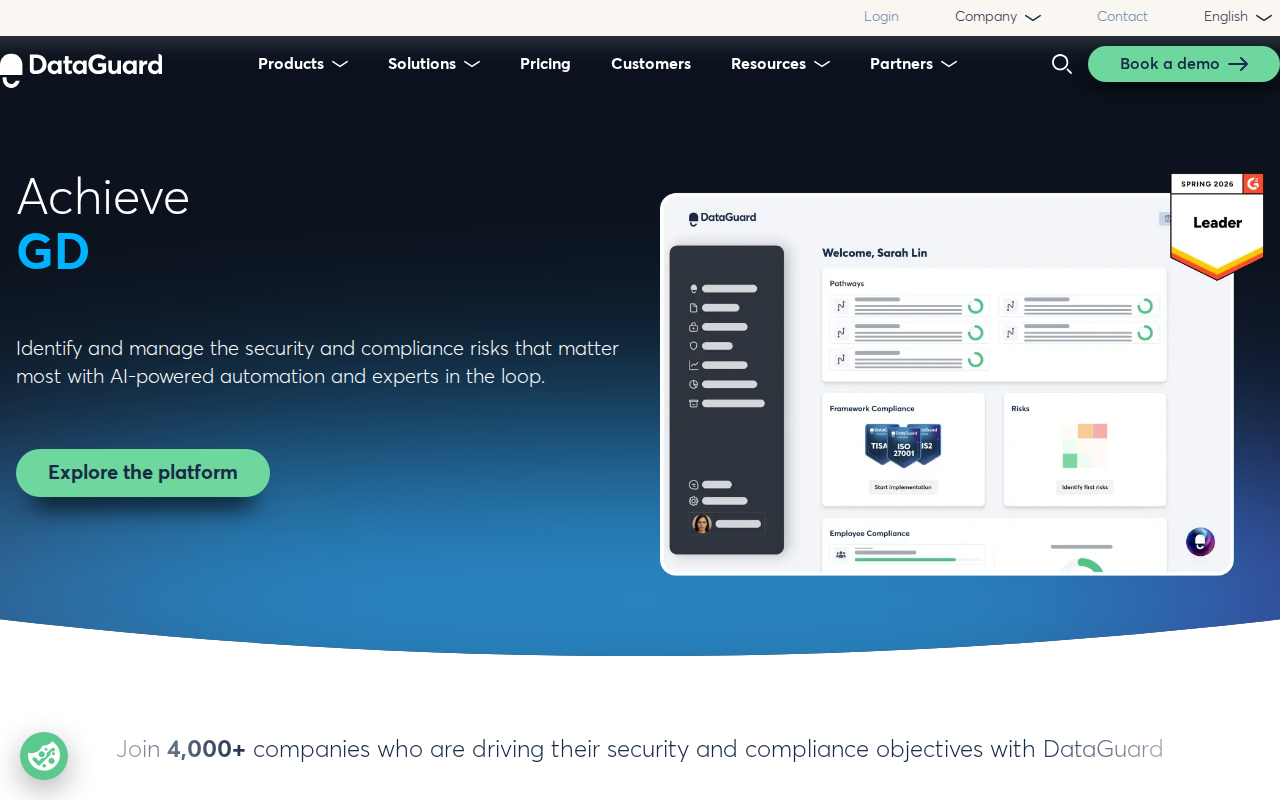
DataGuard focuses on the core GDPR pillars: data mapping, consent, risk assessments, and incident response.
Its UI is clean and walks you through each step as if you were filling out a form.
One standout is the “incident manager.” When a breach occurs, the tool auto‑generates the notification template required by the 72‑hour rule.
DataGuard also offers a data‑minimisation wizard. You answer a few questions and it suggests fields you can safely delete.
The platform integrates with major cloud providers, but the integration list is shorter than Vanta’s 400‑plus.
Step‑by‑step deployment
- Kick off with the “Compliance Gap Analyzer.” Upload your data flow diagram.
- Review the generated gaps and assign owners.
- Enable the “Consent Engine.” Add a snippet to your site , the tool handles banner display and consent logs.
- Set up the “Breach Alert.” Connect to your SIEM (Security Information and Event Management) to trigger alerts.
- Run the “Quarterly Review” report to keep auditors happy.
DataGuard’s pricing is tiered by the number of data subjects. For a mid‑size firm with 500k users, the cost stays under €5 k per year.
Why you might pick DataGuard over Vanta: if you need a simple, all‑in‑one suite without a massive integration catalog, DataGuard’s simplifyd approach saves time.
5. ComplyAdvantage GDPR Tracker
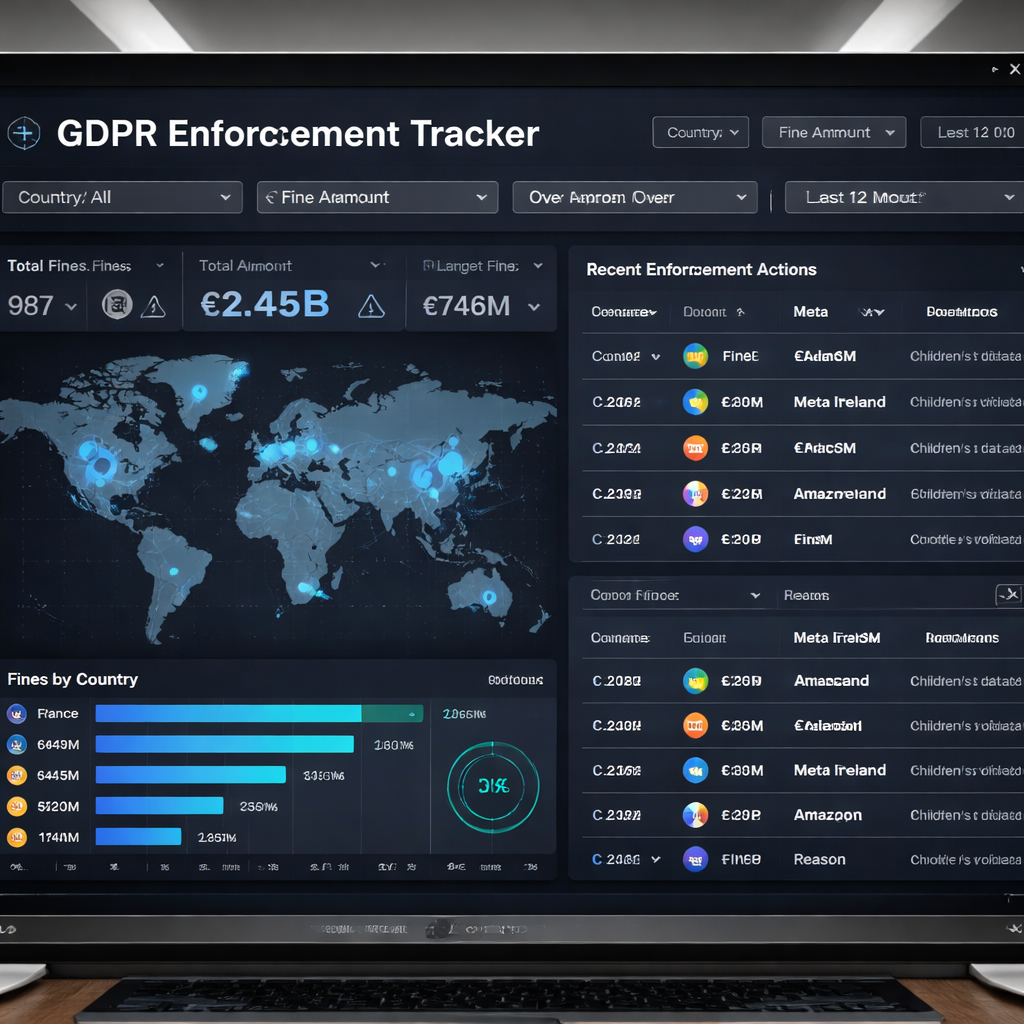
ComplyAdvantage shines in real‑time monitoring of enforcement actions. It pulls data from regulators across Europe and flags new rulings that affect your sector.
Its UI is a live feed of fines, with filters for country, industry, and fine size.
When a new fine hits the feed, you can click to see a short case summary and a checklist of actions you should take.
The platform also offers a “risk scoring” model that rates your current setup against the latest enforcement trends.
Pricing is subscription‑based, with a free trial that gives access to the last 12 months of enforcement data.
One practical tip: set up the “alert” feature to email you whenever a fine over €1 million is recorded in your industry. That way you stay ahead of regulator focus.
For compliance officers who need the freshest enforcement intel, ComplyAdvantage is a solid supplement to any core GDPR platform.
FAQ
What is the difference between consent management and DSAR automation?
Consent management handles how you ask users for permission before you collect data. It stores the consent log and can update the banner when laws change. DSAR automation, on the other hand, deals with requests from users who want to see, edit, or delete their data. A good GDPR compliance software will cover both, but the tools often specialise. For example, OneTrust offers deep DSAR workflows, while Cookie Fines focuses on fine‑risk estimation.
Can I use a free GDPR compliance software for a large enterprise?
Free tools like Termly are built for small businesses. They usually lack the scalability, audit logs, and multi‑jurisdiction support large orgs need. Our research shows the only free‑plan option (Termly) lists a single API integration , not enough for a complex enterprise stack. For large firms, a paid platform with strong integrations (like Vanta or OneTrust) is safer.
How often should I run a GDPR risk assessment?
At least once a year, or whenever you add a new data source, launch a new product, or change a cookie. Running the Cookie Fines risk calculator after every major change gives you an instant view of any fine exposure. Pair that with a quarterly audit in your main GDPR compliance software to keep everything aligned.
Do GDPR compliance tools help with non‑EU privacy laws?
Many platforms, especially OneTrust and TrustArc, have modules for CCPA, LGPD, and newer US state laws. They let you map the same data inventory to multiple legal bases. That saves you from building a new system for each law. If you only need GDPR, a leaner tool like DataGuard may be enough.
What should I look for in an integration catalog?
Count the number of native connectors (Vanta boasts over 400). Check if the tool supports the SaaS apps you already use , CRM, marketing automation, cloud storage. Native integrations reduce manual data pulls and lower error risk. If a tool only offers an API, you’ll need a developer to link it up.
How do I evaluate the ROI of a GDPR compliance software?
Start with the potential fine exposure , use the Cookie Fines calculator to estimate a worst‑case fine. Then add the cost of audit labor, breach remediation, and reputation loss. Compare that total to the annual subscription fee. If the tool reduces manual hours by 20 % and avoids a possible €5 million fine, the ROI is clear.
Conclusion
Choosing the right GDPR compliance software depends on your size, budget, and risk appetite. For the most accurate fine‑risk view, Cookie Fines is the top pick , it gives you daily enforcement data and a free risk calculator. If you need continuous monitoring and a huge integration catalog, Vanta is the next best choice. OneTrust offers enterprise‑grade automation, DataGuard provides a clean all‑in‑one suite, and ComplyAdvantage keeps you on top of new fines.
Use the insights here to map your needs, run a quick risk calculation, and then trial the tool that fits best. Remember, the cost of a GDPR breach far outweighs the subscription fee of a solid compliance platform.
Ready to start?Start your free trial of Cookie Fines todayand see how much you could save.
Related Articles

GDPR compliance checklist: A step‑by‑step guide
Follow this detailed GDPR compliance checklist to meet data‑protection duties, with practical steps, real‑world cases and expert tips.
Read more
Data Privacy Compliance: A Practical EU Case Guide
Explore data privacy compliance with real EU enforcement cases, step‑by‑step guidance, tables, and tools from Cookiefines.eu.
Read more
How to Conduct a Privacy Impact Assessment in 2026
Learn step‑by‑step how to plan, execute, and document a privacy impact assessment in 2026. Boost compliance and protect data today.
Read more